Exploring the Creative and Practical Potential of Flower Bloom in Ultra-High Resolution
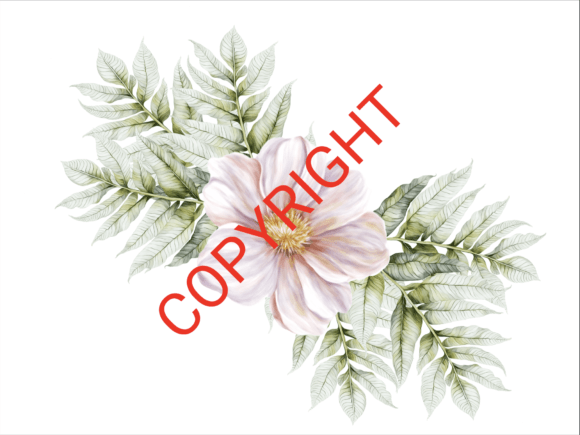
The world of digital imagery has expanded far beyond simple snapshots. For professionals, hobbyists, and educators alike, the demand for detail-rich, versatile visuals continues to grow. Within this landscape, the Flower Bloom collection stands out as a remarkable resource—a set of floral images captured at a resolution that demands attention and delivers unmatched clarity. Whether you are designing a billboard, studying botanical anatomy, or crafting digital art, understanding what these files offer and how to handle them effectively can transform your workflow and final output.
Understanding the Technical Specifications of Flower Bloom Files
At the heart of the Flower Bloom collection lies a deliberate technical choice: every image is supplied as a PNG file with a resolution of 300 DPI and dimensions of 10,000 pixels by 7,500 pixels. These numbers are not arbitrary; they reflect a commitment to quality that serves a wide range of high-end applications. The PNG format ensures lossless compression, preserving every subtle gradation of color and detail in the petals, leaves, and background elements. The 300 DPI standard means that when printed, the image will retain sharpness and clarity even at large sizes. A 10,000 x 7,500 pixel canvas allows for extreme cropping, enlargement, or use as a backdrop without introducing pixelation. This combination of format, resolution, and dimensions makes the Flower Bloom imagery uniquely suited for both on-screen display and physical reproduction.
Why Flower Bloom Appeals to Creatives and Professionals
The appeal of the Flower Bloom collection spans multiple disciplines. Graphic designers value the ability to isolate floral elements from their backgrounds with precision, thanks to the PNG transparency support. Photographers and digital artists appreciate the sheer amount of data in each file—every vein on a leaf, every dewdrop on a petal is rendered with lifelike fidelity. For educators in botany or horticulture, these images serve as detailed visual references that can be magnified for classroom presentations or printed as posters. The high resolution also makes Flower Bloom images ideal for texture mapping in 3D modeling, where realistic floral details add depth and authenticity to virtual environments.
Business owners in retail or hospitality often require large-format prints for window displays, lobby art, or product packaging. The 300 DPI and giant dimensions ensure that even a 40-inch print remains crisp. Interior designers use these images for custom wallpaper, canvas wraps, or framed artwork where the bloom imagery becomes a focal point. The versatility of the format means that the same file can be repurposed for a website hero image (downsampled), a trade show banner, or an editorial illustration. This reusability adds significant value, especially for small teams or solo practitioners who need maximum return on their visual assets.
Digital Art and Illustration
Digital artists often work with layered compositions. The Flower Bloom PNGs, typically having transparent or easily masked backgrounds, integrate seamlessly into projects. Because the files are so large, artists can zoom in to paint or retouch fine details without losing quality. The high bit depth also supports smooth blending and color grading. Some artists use parts of the bloom as brushes or patterns, extracting textures that would be impossible to achieve from lower-resolution sources.
Professional Printing and Signage
Print shops frequently encounter the challenge of scaling images up to poster or banner size. With Flower Bloom files, there is no need to upscale artificially—the native dimensions already accommodate print runs up to 33 by 25 inches at 300 DPI (or even larger at lower DPI for billboards). The PNG format's lack of generational loss means that after multiple edits and saves, the floral detail remains pristine. This is particularly important when printing on canvas, fine art paper, or metallic media, where every sharpness difference becomes visible.
Educational and Research Materials
Biology teachers, botany researchers, and natural science communicators benefit from the clarity of Flower Bloom imagery. They can annotate the images, extract portions for diagrams, or project them in lecture halls without pixelation. The 300 DPI standard ensures that when printed as handouts or lab sheets, students can observe fine structures like stamen arrangement or petal venation. For researchers documenting plant varieties, these images serve as high-fidelity records that can be compared over time or shared with collaborators.
Web and UX Design
While the native resolution is far beyond typical web requirements, designers appreciate having a master file from which they can generate responsive image variants. By downsampling the Flower Bloom PNGs, they create retina-optimized icons, backgrounds, or product images that maintain sharpness on high-PPI displays. The PNG transparency also allows for creative overlay effects without clipping paths.
Workflow Considerations for Handling Large PNG Files
Working with 10,000 x 7,500 pixel PNG files requires a deliberate approach. Note: a PC computer is needed to unzip the file and the files are in a PNG format, so make sure you have an editing program that allows these types of files. This is not a casual smartphone task; the file sizes can range from 50 MB to over 200 MB compressed. After unzipping, you will need software capable of handling such dimensions. Adobe Photoshop, Affinity Photo, GIMP, or Corel Painter are all suitable choices. Even free programs like Paint.NET on Windows can handle these files if your system has enough RAM (16 GB or more is recommended).
Before opening the file, ensure your PC has sufficient storage space and that your editing program is not set to limit image dimensions. Some older software may cap at 30,000 pixels, but 10,000 is well within modern limits. When unzipping, use a tool like 7-Zip or WinRAR that can handle large archives efficiently. Once extracted, you may want to save a copy in a working format (PSD, TIFF) with layers, keeping the original PNG as a backup. Be mindful of undo history and scratch disk settings—large files can quickly exhaust memory if you layer multiple edits.
If your workflow involves frequent cropping or resizing, consider creating a preset action that downsamples to a more manageable size for early drafts, then switches to the full resolution for final output. This prevents slow response times while you explore compositions. Also, because PNG is a lossless format, saving occasionally during editing avoids losing work, but be aware that save times can be longer than with JPEG.
Advantages of 300 DPI and Gigantic Dimensions
The combination of 300 DPI and 10,000 x 7,500 pixels offers flexibility that lower-resolution images cannot match. DPI (dots per inch) becomes relevant only when printing, but it influences the physical print size at maximum quality. With Flower Bloom files, you can print a crisp 33 x 25 inch image without any interpolation. If you need a larger print, you can reduce DPI to 150 and get a 66 x 50 inch poster with acceptable sharpness for viewing distance. The high pixel count also enables deep cropping: you can extract a 4,000 x 3,000 pixel section (still 300 DPI at 13 x 10 inches) from a particular blossom and discard the rest, effectively turning one image into multiple compositions.
For digital use, the dimensions mean you can fill a 4K monitor with a portion of the image and still retain pixel-perfect sharpness. When used as a texture in 3D rendering, the large canvas prevents tiling artifacts because you can map a single, huge texture across a large surface. This reduces the need for repeating patterns and enhances realism.
Tips for Getting the Most Out of Flower Bloom Resources
- Plan your output first. Decide whether you need print or screen resolution before editing. Work on a copy, not the original, to preserve the master file.
- Leverage transparency. Many Flower Bloom PNGs include alpha channels. Use layer masks instead of erasing pixels to retain the ability to change backgrounds later.
- Test color profiles. The images are likely in sRGB or Adobe RGB. For printing, ensure you convert to CMYK with proofing if needed. Soft-proof in your editing program to avoid surprises.
- Organize files carefully. With such large files, disk space adds up quickly. Name files systematically and consider using an external drive or cloud storage for archives.
- Use smart objects. In Photoshop, import the Flower Bloom PNG as a smart object. This allows you to scale and transform without degrading the original data, and you can replace the source if you get an updated version.
- Experiment with downsampling. For most digital uses, you can reduce dimensions to 4000 pixels on the long side and still have more than enough detail. Keep the original safe for any future high-res need.
The Flower Bloom collection offers a rare combination of extreme resolution, print-ready quality, and subject matter that resonates with a wide audience. Whether you are a graphic designer looking for the perfect background texture, a botanist documenting a species, or a business owner creating a stunning lobby display, these files provide a foundation for professional results. The key is to respect the technical requirements—a capable PC, suitable editing software, and sufficient storage—to unlock the full potential of the bloom imagery. By understanding both the capabilities and the handling of these large PNG files, you can incorporate them into your projects with confidence and creativity.