Home is Where Mom is: A Versatile Design Resource for Creative Projects
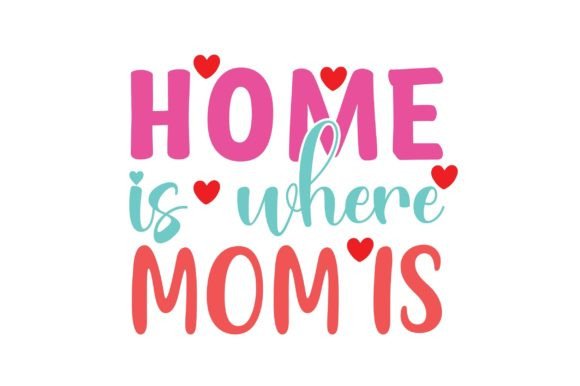
There is a reason certain phrases resonate across generations. "Home is Where Mom is" captures a sentiment that feels both personal and universal. For creators, crafters, and small business owners, turning this idea into a tangible product requires more than just a good concept—it requires the right file formats, attention to detail, and a workflow that supports quality output. This article explores how this particular design asset can be integrated into real projects, from initial planning to final production.
Understanding the Asset and Its Purpose
At its core, "Home is Where Mom is" is a vector-based design intended for use across multiple platforms and media. It is not a single file but a collection of formats—SVG, DXF, EPS, PNG, and AI—each serving a specific function in the creative pipeline. Whether you are cutting vinyl for a custom t-shirt, printing posters for a small shop, or designing digital content for social media, having access to multiple file types ensures that the design can move seamlessly from software to finished product.
The asset is built with 100% vector shapes, meaning it is resolution-independent and can be scaled without loss of quality. This characteristic makes it suitable for large format prints, detailed stickers, or small embroidery designs. The inclusion of a high-resolution PNG with a transparent background adds flexibility for users who need a ready-to-use image without editing software.
File Formats and Their Real-World Uses
Understanding which file to use and when can save time and reduce frustration. Here is a breakdown of what each format offers and where it fits into a typical workflow.
SVG (Scalable Vector Graphics) is the go-to format for cutting machines like Cricut Explore and Silhouette Designer Edition. Because SVG files store mathematical paths rather than pixel data, they can be resized without jagged edges. When you load an SVG into your design software, the machine interprets the paths and cuts precisely along them. This makes the format ideal for vinyl decals, iron-on transfers, and card stock projects.
DXF (Drawing Exchange Format) is another vector format, often used by Silhouette users who work with the free version of Silhouette Studio. While SVG support in free software can be limited, DXF files open reliably and retain the vector structure needed for cutting. If you collaborate with other crafters or share files within a community, DXF ensures compatibility across different software versions.
EPS (Encapsulated PostScript) is a standard format for professional design applications like Adobe Illustrator, Inkscape, and Corel Draw. Graphic designers and illustrators often prefer EPS because it preserves vector data and supports advanced color management. If you plan to modify the design or incorporate it into a larger composition, EPS gives you the most control over individual elements.
PNG (Portable Network Graphics) at 300 DPI with a transparent background is the raster option in this collection. It is ready to use out of the box, no software required. You can drag it into a document, upload it to a print-on-demand platform, or share it on social media without any editing. The high resolution ensures that printed results remain sharp, and the transparency makes overlay placement effortless.
AI (Adobe Illustrator) files are fully editable and allow you to change color formats directly. If you work in Illustrator, opening the AI file gives you access to the original layers, groups, and color swatches. This is useful when you need to create variations of the design—different colors for different products, seasonal updates, or customizations for specific clients.
Planning Your Project Around the Design
Before you open any file, consider where and how you intend to use the final product. The phrase "Home is Where Mom is" pairs naturally with gifts, home decor, and apparel, but the same design could also serve as a branding element for a family-oriented business or a motif in a larger layout.
Start with a list of possible applications. A single design can yield multiple products if you plan ahead. For example, you could cut the SVG into vinyl for a mug, print the PNG on a tote bag, and use the EPS to create a larger wall art piece. By preparing all variations from the same source file, you maintain visual consistency across your product line.
File organization matters here. Keep the downloaded folder intact, but also create a working folder where you save edited versions. Name your files clearly—for example, "home-is-where-mom-is-horizontal-mug.svg" instead of "final-edit3.svg." This habit becomes essential when you revisit a project weeks or months later.
Preparation Steps Before Cutting or Printing
Even with high-quality files, a few preparation steps ensure reliable results.
- Check your software compatibility. Confirm that your version of Cricut Design Space, Silhouette Studio, or Illustrator supports the file format you plan to use. Some older versions may not handle SVG well, so DXF or EPS might be more reliable.
- Inspect the design layers. Open the AI or EPS file and look at the structure. Vector shapes should be well-organized and not overlapping in ways that cause cutting issues. If you see stray points or open paths, use the pathfinder tools to clean them up.
- Set the correct dimensions. Vector files open at their default size, but you may need to scale them. For cutting, keep the dimensions within your machine's limits. For printing, scale to the size of your substrate while maintaining the aspect ratio.
- Test on scrap material. Before committing to your final material, run a test cut or print on a sample piece. This verifies that the design renders correctly and that the colors, if any, match your expectations.
Workflow Examples Across Use Cases
To illustrate how the asset fits into real processes, consider three common scenarios: creating custom apparel, producing stickers for sale, and designing a digital greeting card.
Custom Apparel. A small business owner preparing for a Mother's Day sale can use the SVG file with a heat press or cutter. The workflow begins in Cricut Design Space: upload the SVG, resize it to fit a standard t-shirt front, and mirror the design if using iron-on vinyl. After cutting and weeding, the design transfers to the garment. The PNG file can serve as a mockup for listing photos or social media previews. Because the design is vector-based, scaling it for youth sizes or larger adult sizes maintains the same crisp edges.
Sticker Production. Sticker sellers often need both vector and raster files. The DXF or SVG works for die-cutting machines that produce kiss-cut or contour-cut stickers. The PNG file, with its transparent background, can be uploaded to print-on-demand platforms like Redbubble or Society6. The 300 DPI resolution ensures that even small stickers—like those used for laptops or water bottles—retain detail. For a sticker sheet, you can open the AI file, duplicate the design, and arrange multiple copies within the cut area.
Digital Greeting Card. Freelancers and educators who create printable resources can use the PNG directly in Canva, Word, or Publisher. Drop the transparent image onto a card template, add a border or personal message, and export as a PDF for printing. The EPS file allows for color changes if you want to match the card to a specific brand palette. This approach works well for classroom activities, church groups, or family newsletters.
Integration with Broader Creative Processes
Design assets do not exist in isolation. "Home is Where Mom is" can function as a starting point or as a supporting element within a larger project. Understanding where it fits in your overall workflow helps you use it more efficiently.
If you are a marketer creating social media content for a campaign around family or home, the PNG file can be layered into Instagram posts, Facebook covers, or email headers. The transparent background allows it to sit cleanly over images or branded backgrounds. The vector formats allow you to tweak colors to match seasonal campaigns without losing resolution.
For educators and bloggers, the design can be used in worksheets, reading materials, or event flyers. The editable AI file makes it easy to add text, adjust sizes, or combine elements from other resources. Because the file is well-structured, you can isolate individual parts of the design—like a heart or a text element—and reuse them in other projects.
Small business owners who sell on Etsy or at craft fairs can use the design across multiple product categories. A single design that works on mugs, shirts, and signs reduces the number of unique assets you need to create. This consistency builds brand recognition and simplifies inventory management.
Quality Control Checks
Long-term use of any design asset depends on how well it holds up under repeated use. A few quality control habits can prevent problems downstream.
- Verify resolution on printed items. Always check that the PNG exports at the correct DPI. If you scale it up too far, you may introduce pixelation. Stick to the original dimensions or scale down.
- Test color accuracy. Colors on screen do not always match printed colors. If you modify the AI or EPS file, use CMYK color mode for print projects and RGB for digital use. Some vector files come in RGB by default, so convert before sending to a printer.
- Check cut lines. For cutting machines, ensure that the design has no unnecessary overlapping paths that cause the blade to cut multiple times. Simplify the vector paths if needed.
- Archive original files. Keep the downloaded ZIP or folder in a secure location. If you ever need to start over or access the original unmodified design, you will have it available.
Practical Observations for Long-Term Use
Working with vector assets over time reveals a few patterns worth noting. First, the ability to change colors easily makes the AI and EPS formats valuable for seasonal lines. A design originally intended for Mother's Day can be recolored for a fall harvest theme or a winter holiday collection. This extends the lifespan of the asset and increases your return on investment.
Second, the cross-platform compatibility of SVG and DXF means you are not locked into one ecosystem. You can start a project on a home computer with Inkscape, transfer the file to a tablet for adjustments, and then send it to a cutting machine. The design moves with you rather than forcing you to commit to a single software suite.
Third, the high-resolution PNG gives you an immediate output option for clients or collaborators who do not have design software. You can send the PNG as a preview, embed it in a proposal, or use it for social media without requiring anyone else to open a vector file. This reduces friction in collaborative workflows.
Finally, organizing your digital assets by theme or project type saves time. Store "Home is Where Mom is" together with other family-oriented designs in a clearly labeled folder. When you plan a new product launch or a seasonal campaign, you can quickly browse your collection and choose designs that fit the occasion.
Making the Design Work for Your Specific Needs
No single approach fits every creator. Some users will prioritize the SVG for its compatibility with cutting machines. Others will lean on the PNG for its simplicity. The value of this asset lies in having all options available so you can adapt as your project evolves.
If you are designing for print, start with the AI or EPS file and adjust the color profile. If you are prototyping a new product, use the SVG to run a quick cut test. If you are posting on social media, the PNG is ready to go in seconds. The flexibility to move between formats is what makes this type of resource useful across different stages of a project—from brainstorming to final production.
Ultimately, "Home is Where Mom is" is a starting point. The sentiment it expresses is timeless, but its application depends on your skills, tools, and goals. By understanding the file formats, preparing your workspace, and integrating the design into a coherent workflow, you can turn a simple phrase into a finished product that resonates with your audience.