The Rise of Relatable Humor in Print on Demand: Exploring “Most Likely to Need a Silent Night” and “Probably Late for Something” T-Shirt Designs
Print on demand (POD) has transformed the way independent creators, small business owners, and even casual entrepreneurs approach apparel. No longer do you need to invest in bulk inventory or worry about warehouse space. Instead, you can design a shirt, upload it to a platform, and sell it one at a time—with zero upfront cost. But with this ease comes one enormous challenge: standing out. In a sea of millions of designs, how do you create something that actually connects with people? The answer often lies in humor that feels personal, specific, and deeply relatable. Two designs that have been gaining traction recently are “Most Likely to Need a Silent Night” and “Probably Late for Something.” These aren’t just clever phrases—they tap into universal human experiences. This article explores the meaning behind these designs, why they resonate, how they fit into the POD ecosystem, and how you can leverage them effectively in your own business.
What Is Print on Demand and Why Does Design Matter?
Print on demand is a business model where products—typically apparel, accessories, or home goods—are printed only after a customer places an order. The seller does not hold inventory. Instead, a third-party supplier prints the design on demand and ships it directly to the customer. This model lowers the barrier to entry dramatically. Anyone with a creative idea can start selling within hours.
However, because the barrier is so low, competition is fierce. The difference between a successful POD store and one that languishes often comes down to design quality, emotional resonance, and niche targeting. A great design is not just visually appealing—it tells a story, makes someone feel seen, or gives them a reason to smile. That is exactly what “Most Likely to Need a Silent Night” and “Probably Late for Something” accomplish.
The Psychology Behind Relatable T-Shirt Humor
Why do we buy T-shirts with funny or self-deprecating messages? The answer lies in identity expression. Clothing is one of the most visible ways we signal who we are—or who we want to be. When someone wears a shirt that says “Probably Late for Something,” they are not just making a joke about their punctuality. They are telling the world, “I’m busy, I’m juggling a lot, and I’m okay with being a little imperfect.” That kind of vulnerability is endearing and creates instant connection with others who share the same trait.
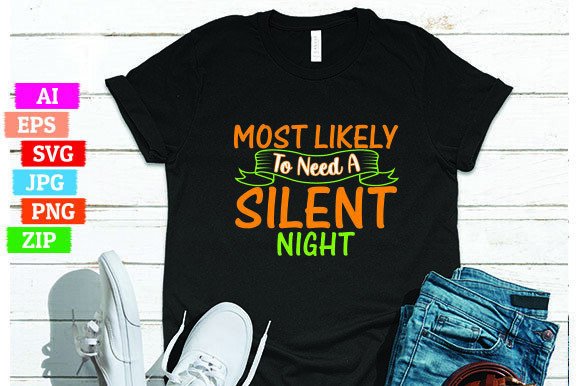
The same logic applies to “Most Likely to Need a Silent Night.” This design appeals to anyone who feels overstimulated, tired, or stretched thin. In a culture that glorifies hustle and constant productivity, admitting that you need quiet is almost rebellious. Wearing that message is a way of reclaiming rest. These designs work because they name a feeling that many people experience but rarely say out loud.
Emotional connection drives purchase decisions
Research in consumer psychology shows that emotional connection is a stronger predictor of purchase intent than price or even product features. When a customer sees a design that mirrors their own internal experience, they are far more likely to buy. They are also more likely to share it on social media, give it as a gift, or wear it proudly—which generates free word-of-mouth marketing for you.
Design Deep Dive: “Most Likely to Need a Silent Night”
This design speaks directly to the introvert, the overworked parent, the sleep-deprived professional, and anyone who craves a moment of peace. The phrase plays on the yearbook cliché “Most Likely to…” but subverts it with a modern, vulnerable twist. Instead of “Most Likely to Succeed,” it suggests that the wearer is most likely to need silence. That shift is powerful because it validates a need that is often dismissed or stigmatized.
Who is the target audience?
- Introverts and highly sensitive people who need quiet to recharge
- Parents of young children who rarely get a moment to themselves
- Teachers, healthcare workers, and caregivers who give constant emotional energy
- Anyone feeling burned out from the demands of modern life
Design style suggestions
To make this design truly eye-catching, consider pairing the text with imagery that reinforces calm—perhaps a crescent moon, a cozy armchair, a steaming mug, or a quiet night sky. The color palette should lean toward soothing tones: deep blues, soft grays, lavender, or muted greens. The typography should be legible yet warm, avoiding harsh or aggressive fonts. A handwritten or script style can add a personal touch.
Design Deep Dive: “Probably Late for Something”
This second design targets a different but equally relatable archetype: the chronically busy person who runs on their own schedule. Whether it’s due to overcommitting, poor time estimation, or simply having too many responsibilities, this message resonates with a huge audience. The humor is gentle and forgiving—it doesn’t shame lateness, it embraces it as part of identity.
Who is the target audience?
- Students and young professionals juggling classes, work, and social life
- Freelancers and entrepreneurs who manage their own time
- Busy parents shuttling kids between activities
- Anyone with ADHD or executive function challenges who struggles with time management
Design style suggestions
For “Probably Late for Something,” the visual treatment can be more playful. Think about adding a clock with broken hands, a frantic character, or a calendar with scribbles. Bold, slightly messy typography can reinforce the sense of rush. Colors might include bright reds, yellows, or oranges to convey urgency, or alternatively, muted earth tones for a more understated, ironic take. The key is to match the visual energy of the phrase.
Why These Two Designs Work as a Collection
While each shirt stands on its own, offering them together as a collection creates synergy. Customers who relate to one often relate to the other. After all, the person who desperately needs a silent night is often the same person who is always late because they are trying to squeeze too much into their day. By bundling these designs—or cross-promoting them—you increase average order value and give customers a reason to buy both.
Cross-selling and bundling strategies
- Offer a discount bundle for purchasing both designs together
- Create a “Mood Collection” that includes both shirts along with other relatable messages
- Use social media polls to ask followers which design fits them best, then suggest the other as a gift
- Write blog content (like this article) that explains the meaning behind each design, linking to product pages
Practical Tips for Selling These Designs in Your POD Store
Creating the design is only half the battle. To actually make sales, you need to optimize your store for discovery and conversion. Here are actionable strategies that work well for humor-based POD products.
Optimize your product titles and descriptions
Instead of a bland title like “Silent Night T-Shirt,” use something more descriptive: “Most Likely to Need a Silent Night – Funny Relatable Gift for Introverts.” Include keywords that your target audience might search for, such as “quiet time shirt,” “introvert humor,” “burnout gift,” or “gift for tired moms.”
Use high-quality mockups
Your listing images should show the design on a real-looking person in a lifestyle setting. A shirt laid flat on a table is less compelling than a photo of someone laughing while wearing it. If you don’t have models, use high-quality mockup generators that support realistic lighting and fabric textures.
Leverage user-generated content
Encourage customers to share photos of themselves wearing your designs. Repost these on your social channels and product pages. Social proof is one of the strongest drivers of trust in e-commerce.
Run targeted ads
Both “Most Likely to Need a Silent Night” and “Probably Late for Something” lend themselves well to targeted Facebook or Instagram ads. You can narrow your audience by interests like “introversion,” “parenting humor,” “ADHD support,” or “burnout recovery.” The specificity of the designs makes targeting more effective.
File Formats and What They Mean for Your Business
When you purchase a design like this, you typically receive it in multiple file formats to accommodate different workflows. Understanding these formats helps you use the files correctly and avoid frustration.
| Format | Best For |
|---|---|
| AI (Adobe Illustrator) | Editing vector layers, changing colors, adjusting typography |
| SVG (Scalable Vector Graphics) | Web use, cricut or silhouette cutting machines, scalable resizing |
| PNG (Raster) | Direct upload to POD platforms, social media, mockups |
| EPS (Encapsulated PostScript) | Professional printing, large-format output, compatibility with older software |
| Transparent PNG | Layering over backgrounds, clean product previews |
All these files are typically compressed into a single ZIP folder. Simply extract them or double-click to open. Keep the AI and SVG files for future editing, and use the PNG or transparent PNG for immediate upload to your POD platform.
Common Misunderstandings About POD Designs
One of the biggest mistakes new sellers make is assuming that a great design alone will sell. In reality, marketing, niche selection, and listing optimization are equally important. A design like “Most Likely to Need a Silent Night” could flop if it is buried under generic keywords or displayed on a low-quality mockup. Conversely, a simple design can become a bestseller if it is positioned well and reaches the right audience.
Another misunderstanding is that you need to create entirely original artwork from scratch. Many successful POD sellers start with well-designed templates or licensed graphics, then customize them with unique text, color schemes, or layout tweaks. The key is to add enough value so that your version feels distinct and targeted.
How These Designs Fit Into Modern Life and Culture
We live in an era of constant connectivity, endless notifications, and pressure to optimize every waking hour. The rise of phrases like “quiet quitting,” “bed rotting,” and “low-demand weekends” shows that people are actively seeking permission to rest. “Most Likely to Need a Silent Night” taps directly into that cultural moment. It gives people a way to wear their need for rest as a badge of honor rather than a flaw.
Similarly, “Probably Late for Something” speaks to the chaos of modern schedules. Between remote work, side hustles, family obligations, and social commitments, many people feel like they are always behind. This design offers a lighthearted way to acknowledge that reality without shame. It turns a source of stress into a conversation starter.
Conclusion: Turning Relatable Humor into a Sustainable POD Business
Print on demand is not a get-rich-quick scheme, but it is a legitimate and accessible way to build a creative business. The key is to choose designs that genuinely connect with people. “Most Likely to Need a Silent Night” and “Probably Late for Something” are excellent examples of how a simple, well-crafted phrase can resonate emotionally, drive engagement, and lead to consistent sales.
By understanding the psychology behind these designs, optimizing your store for discoverability, and using the right file formats for your workflow, you can turn a clever idea into a profitable product line. Whether you are a seasoned POD veteran or just starting out, these designs offer a strong foundation for a collection that speaks to the real, imperfect, and wonderfully relatable experiences we all share.
So go ahead—extract that ZIP folder, open the AI file, and start experimenting with colors and layouts. Your audience is out there, silently wishing for a shirt that finally says what they feel. Give them that gift, and they will thank you with more than just a purchase.