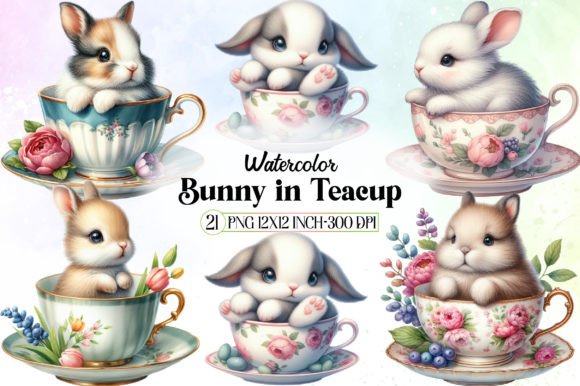
Watercolor Bunny in Teacup Clipart: Strategic Design for Creative Entrepreneurs and Content Professionals
When you work with visual assets day after day, you begin to recognize which ones earn their place in your toolkit and which ones simply take up space. The Watercolor Bunny in Teacup Clipart set falls into the former category for many creators, but only when used with intention. This collection of 21 designs in a solid color distressed effect offers more than surface-level charm. It presents a practical opportunity to strengthen brand consistency, streamline content production, and deliver a cohesive visual experience across multiple platforms.
Understanding what this clipart package actually contains is the first step toward making an informed decision. Each design comes at 300 dpi, sized at 12×12 inches with a transparent background, and each element is provided in PNG format. The resolution alone means you are working with print-ready quality, not a disposable web graphic. The transparent background gives you flexibility to layer these illustrations into existing layouts without wrestling with awkward edges or mismatched backgrounds. The distressed effect adds texture and depth, which matters when you want your projects to feel handcrafted rather than purely digital.
For entrepreneurs, small business owners, and freelancers who produce their own marketing materials, the practical utility of a well-constructed clipart set cannot be overstated. You are not merely buying cute images. You are buying back time, reducing dependency on outsourced design work, and gaining the ability to maintain visual coherence across product lines. When every design element in your catalog shares a consistent aesthetic, your brand becomes easier to recognize and trust. That recognition does not happen by accident. It happens because you made deliberate choices about the assets you use.
Why Intentional Design Assets Matter for Long-Term Results
The temptation to treat clipart as a quick decorative fix is understandable. Deadlines loom, budgets tighten, and you need something that works now. But the difference between using design assets strategically versus using them reactively often determines whether your projects communicate clarity or clutter. The Watercolor Bunny in Teacup Clipart set, with its unified distressed style and consistent color palette, allows you to build a library of materials that feel connected rather than assembled from random sources.
Consider your product lineup for a moment. You might sell or create items such as T-shirts, mugs, totes, sublimation prints, pillows, digital downloads, or home décor pieces. Each of these formats presents a different canvas size, material, and audience expectation. Working with a set of designs that share the same resolution, file type, and artistic treatment means you can adapt a single motif across multiple products without starting from scratch. You are not reinventing the wheel every time you move from one product category to another. You are applying a consistent visual language that your customers begin to recognize and associate with quality.
From a production standpoint, the 300 dpi resolution and transparent background reduce technical friction. You can place the bunny illustration into a mockup for a mug, resize it for a tote bag, or layer it onto a sublimation transfer sheet without worrying about pixelation or background artifacts. That technical reliability translates into fewer revisions, less wasted material, and faster turnaround times. For a small business owner or solopreneur, those efficiencies directly affect your bottom line.
Aligning Design Choices with Your Brand Positioning
Every visual asset you use says something about your brand. The Watercolor Bunny in Teacup Clipart communicates warmth, gentleness, and a handcrafted sensibility. The watercolor effect suggests artistry rather than cold precision. The distressed texture adds a vintage or rustic layer that works well for brands focused on natural living, children's products, stationery, gifts, or artisan goods. If your target audience values sincerity, charm, and approachable aesthetics, this design collection aligns naturally with that positioning.
However, alignment only works when you are clear about your positioning in the first place. Before you download and deploy these illustrations, ask yourself what role they will play in your overall visual strategy. Are they a primary motif for an upcoming seasonal collection? Are they accent elements for social media graphics or email headers? Are they part of a larger pattern or fabric design? Defining the purpose upfront prevents you from scattering the imagery across unrelated projects where it might feel out of place or dilute your brand message.
One practical approach is to create a simple usage map. List the channels and product categories where you plan to apply the bunny designs. Beside each channel, note the specific goal: driving engagement, increasing conversion, reinforcing brand identity, or enhancing customer experience. When you connect each design use to a measurable outcome, you move from random decoration to deliberate communication. This is the difference between decorating and designing.
When to Use Watercolor Bunny in Teacup Clipart for Maximum Impact
Timing and context matter as much as the asset itself. The Watercolor Bunny in Teacup Clipart is particularly effective in scenarios where you want to evoke comfort, nostalgia, or a gentle sense of whimsy without overwhelming your audience. Seasonal campaigns around Easter, spring, or baby showers are obvious fits. But the utility extends beyond holiday-specific projects. Think about product launches aimed at parents, educators, or gift buyers. Think about content for blogs or social channels focused on slow living, creativity, or handmade culture. The bunny motif carries emotional weight that resonates with audiences seeking authenticity and warmth.
You might also consider using this clipart set for internal or educational materials. If you create printables, planners, or learning resources for children or adults, the watercolor style invites interaction without feeling sterile. The distressed effect gives the artwork a tactile quality that digital natives often find refreshing. In a world of hyper-polished, AI-generated imagery, handcrafted-looking assets stand out because they feel human.
On the operations side, having a complete set of 21 designs means you can batch your content creation. Spend one afternoon preparing all your sublimation files, mockups, and print layouts. Then schedule your releases or production runs across several weeks or months. Batching reduces the cognitive load of switching between creative tasks and administrative tasks. It also ensures that your product line maintains visual harmony, even if you launch items at different times.
Strategic Considerations Before You Start Designing
Before you open your editing software, take a few minutes to evaluate how these designs fit into your current workflow and long-term goals. Here are several factors worth considering:
- Brand consistency: Does the watercolor distressed style complement your existing color palette and typography? If your brand leans minimalist or modern, you may need to use these designs sparingly as accent elements rather than primary visuals.
- Audience expectations: Will your customers find this aesthetic appealing or mismatched with what they expect from you? Test a sample design with a small focus group or loyal customer segment if you are unsure.
- Technical requirements: The PNG format with transparent background is versatile, but verify that your printing or sublimation equipment handles distressed textures well. Sometimes fine details in distressed effects can blur on certain materials.
- Licensing and usage rights: Confirm that your intended use falls within the license terms. Commercial projects like T-shirts and mugs are typically allowed, but double-check any restrictions on resale of digital files or use in larger print runs.
- Longevity: Trend-driven designs can date quickly. A watercolor bunny has a timeless quality, but distressed effects may feel tied to a particular aesthetic moment. Plan your product lifecycle accordingly so you are not stuck with inventory that feels stale.
These considerations are not meant to discourage you. They are meant to help you use the asset with confidence rather than regret. A thoughtful pause before production saves time, money, and creative energy later.
Practical Examples of Intentional Application
Let us walk through several realistic scenarios where this clipart set can serve a clear purpose. Each example includes a planning angle and a decision-making note.
Example 1: Seasonal product line for an Etsy shop. You run a small shop selling sublimation mugs and pillows. You decide to create a spring collection featuring the Watercolor Bunny in Teacup Clipart. Your planning steps include choosing three to five designs from the set, creating coordinating backgrounds, and pricing the collection as a limited edition. The goal is to test demand without overcommitting inventory. Decision-making note: if the collection sells well, you can expand with matching totes and T-shirts in the next season. If it does not, you have not produced excess stock.
Example 2: Branded content for a children's book author or educator. You create printable activity sheets, bookmarks, or classroom décor. The bunny designs serve as central motifs that tie the materials together visually. You use the transparent backgrounds to layer text and instructional elements on top. The goal is to produce a cohesive set of resources that parents and teachers recognize as part of your brand. Decision-making note: plan the layout with enough white space so the distressed texture remains readable. Overcrowding the design will obscure the watercolor details that give the artwork its value.
Example 3: Social media campaign for a gift shop or boutique. You are launching a spring promotion and need visuals for Instagram, email newsletters, and website banners. You select one bunny design as the hero image and use variations of it across different platforms. The consistent color palette ensures your campaign looks curated rather than fragmented. The goal is to increase brand recall and click-through rates. Decision-making note: monitor engagement metrics to see if the watercolor style resonates with your audience. If it outperforms your usual content, consider investing in similar design styles for future campaigns.
The Risk of Using Design Assets Without Clear Goals
Even the most beautiful clipart can work against you if you apply it without purpose. The primary risk is visual inconsistency. When you scatter unrelated styles across your products and marketing, your brand identity becomes blurred. Customers may struggle to understand what you stand for or what they can expect from you. Over time, that confusion erodes trust and reduces the likelihood of repeat purchases.
Another risk is overuse. Just because you have 21 designs does not mean you need to use all of them immediately. Flooding your store or social feed with similar imagery can overwhelm your audience and diminish the novelty. Strategic restraint often produces stronger results than maximalist application. Choose your strongest designs and rotate them intentionally.
Finally, there is the risk of misalignment with your audience's preferences. If your typical customer expects sleek, modern visuals, a distressed watercolor bunny may feel out of place. That does not mean you cannot use it. It means you should introduce it gradually and test the response before committing significant resources. Let data guide your decisions, not just your personal taste.
Making Watercolor Bunny in Teacup Clipart Work for Your Long-Term Strategy
To use this asset intentionally rather than randomly, build a simple framework around it. Start by defining the specific outcomes you want to achieve. Write them down. They might include increasing average order value, reducing design production time, launching a cohesive product line, or strengthening brand recognition during a specific season.
Next, map each design to a specific product or channel. Avoid the temptation to use the same illustration everywhere just because you have it. Instead, match the design to the context. A bunny sipping tea in a teacup may work beautifully on a mug but feel out of scale on a large tote bag. Let the proportions and format guide your selection.
Then, create a content calendar or production schedule that includes when you will use each design, how you will repurpose it, and when you will retire it. This prevents creative fatigue and keeps your offerings fresh. If you release a spring collection in March, plan to refresh or replace it by early summer. Deadlines help you stay decisive.
Finally, evaluate the results. Track sales, engagement, customer feedback, and production efficiency. Did using watercolor clipart move the needle on any of your goals? If yes, double down. If not, analyze why. Perhaps the style needs a different audience or a different format. Learning from outcomes, whether positive or negative, is what separates strategic creators from those who simply decorate.
Supporting Your Creative Workflow with the Right Assets
Every professional creator knows that the tools you choose shape the work you produce. The Watercolor Bunny in Teacup Clipart set is a tool, not a solution by itself. Its value depends entirely on how you integrate it into your existing processes. When you approach it with clarity about your goals, your brand identity, and your audience's preferences, it becomes a reliable element in your design system. When you use it without context, it becomes noise.
The fact that this package includes 21 designs, each at 300 dpi with transparent backgrounds, means you have room to experiment without sacrificing quality. You can test different compositions, color variations, and product applications. You can fail fast and iterate. That flexibility is valuable for small business owners and solo operators who need to move quickly without hiring external designers for every project.
If you are building a brand, teaching a skill, or creating products that people invite into their homes, the emotional tone of your visuals matters. A watercolor bunny in a teacup carries a specific feeling: gentle, thoughtful, and slightly nostalgic. That feeling, when aligned with your brand values, can strengthen the connection between you and your audience. Connection is not a soft metric. It drives loyalty, referrals, and long-term revenue.
Use these designs with intention. Plan your applications. Measure your results. And let your creative decisions be driven by strategy rather than impulse. That approach turns a simple clipart set into a genuine asset for your business or creative practice.
Follow us for more stunning artwork that helps you build better products and communicate with purpose.