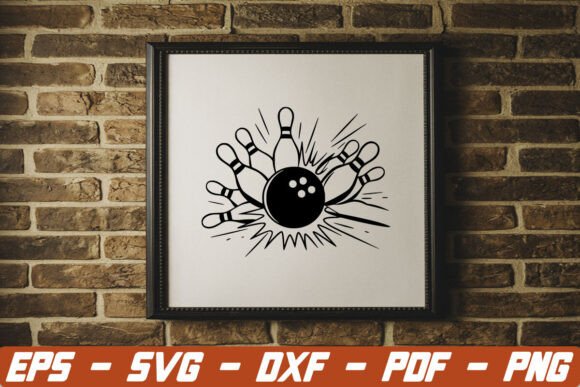
Bowling SVG, Bowling Ball SVG, Bowling PNG: A Practical Toolkit for Creative and Commercial Projects
Digital assets have reshaped how creators, small business owners, and hobbyists approach design work. Instead of starting from scratch with every new project, you can now pull from a library of ready-to-use graphics that maintain professional quality across multiple formats. The Bowling SVG, Bowling Ball SVG, Bowling PNG collection fits squarely into this workflow, offering a set of vector and raster files designed for cutting machines, print projects, and digital mockups. Whether you are producing custom apparel, designing promotional materials for a bowling league, or building a themed digital product, this pack delivers the core visual elements you need without requiring advanced design skills or expensive software.
What the Bowling SVG, Bowling Ball SVG, Bowling PNG Bundle Includes
This digital pack delivers five individual files per graphic: SVG, EPS, PNG, DXF, and PDF. Each format serves a distinct purpose in a typical production pipeline. The SVG file works natively with cutting machine software like Cricut Design Space or Silhouette Studio, allowing precise cuts for vinyl, iron-on transfers, or cardstock. The EPS file is ideal for vector editing in Adobe Illustrator or Affinity Designer, giving you full control over colors, scaling, and layering. The PNG file, rendered at 300 dpi and sized up to 15 x 18 inches, is ready for immediate use in digital mockups, social media graphics, or print-on-demand listings. The DXF format ensures compatibility with older or more specialized CAD-like cutting software, while the PDF offers a universal fallback for proofing and print orders.
Each file is built at a generous maximum dimension, so you can scale down for small decals or use the full size for posters, banners, or large-format heat transfers. The 300 dpi resolution means edges stay sharp, gradients (if present) remain smooth, and text or fine details do not pixelate when printed. For anyone who has struggled with low-resolution clip art that looks blurry at even modest sizes, this level of fidelity removes a major quality-control headache.
Where Bowling SVG Graphics Fit Into Your Workflow
Integrating these assets into your process depends on what you are building and which tools you use. Below are common scenarios where the bowling SVG, bowling ball SVG, and bowling PNG files become practical assets rather than just decorative extras.
Apparel and Accessories Production
If you run a small print shop or sell custom T-shirts, hoodies, and hats on platforms like Etsy or Printful, vector graphics are the backbone of your operation. The SVG and DXF formats allow you to load the bowling ball or bowling pin design directly into your cutting machine software, adjust the size to fit the garment, and produce a clean cut line for heat-transfer vinyl. Because the files are already optimized at 300 dpi, you can preview the design at actual size before cutting, reducing material waste. You can also layer multiple elements—say, a bowling ball with a strike graphic—by importing separate SVG files and aligning them on your virtual mat.
For screen printing, the EPS file gives you the ability to separate colors into distinct layers. Open the EPS in vector software, assign spot colors, and output film positives. The vector nature of the file ensures that even when you scale the design to fit a full back print, the curves remain mathematically precise, and halftones (if needed) can be generated without degradation.
Digital Products and Printables
Sellers of digital planners, sticker sheets, coloring pages, or classroom materials benefit from the PNG file because it requires no additional software to use. You can insert the bowling-themed graphic directly into a Canva template, a Google Doc, or a PDF planner without worrying about missing fonts or linked assets. The transparent background means it layers cleanly over colored sections or photographs. If you sell digital scrapbooking kits or invitation templates, including a bowling SVG set as a bonus element adds perceived value without increasing your production time.
For educational content, such as worksheets about sports scoring or physics of bowling, the PNG can be used as a visual aid in slide decks or handouts. Resize it to fit small spaces or use it as a header image. The high resolution ensures it prints cleanly on standard classroom printers.
Event Decor and Signage
Bowling-themed parties, corporate team-building events, or league nights often require banners, table signs, cupcake toppers, and favor tags. With the PDF format, you can send the file directly to a local print shop or upload it to an online printing service without converting formats. The PDF preserves the vector data, so the print shop can scale it to any size without losing quality. For DIY decor, use the SVG with a cutting machine to create reusable stencils for painting on poster board or fabric banners. The DXF file ensures that even if your cutting machine software is older or non-standard, you have a fallback format that most programs accept.
Practical Implementation Tips for Consistent Results
Getting the most out of the Bowling SVG, Bowling Ball SVG, Bowling PNG pack involves more than just downloading and unzipping. A few preparation steps and workflow habits can save time and reduce errors.
Organize Your Files by Use Case
When you unzip the download, you will see multiple format folders. Instead of leaving them scattered, create a master folder for bowling-themed assets and subfolders labeled by format (SVG, EPS, PNG, DXF, PDF). Inside the SVG folder, you might further organize by intended use: apparel, signage, digital. This structure makes it easy to locate the correct file when you are in the middle of a project and need to move quickly. If you collaborate with other team members or outsource production, a consistent file naming convention also prevents confusion.
Test Cut Before Bulk Production
Before cutting a dozen iron-on transfers for a league order, run a test cut on scrap material. The SVG file should load correctly into your software, but machine settings (blade depth, pressure, speed) vary by material brand and thickness. Check that the design cuts cleanly and that small details—like the finger holes on the bowling ball—do not fall apart during weeding. If the holes are too small for your vinyl, use vector editing software to enlarge them slightly without distorting the overall shape. The EPS format makes this adjustment straightforward because you can modify anchor points without rasterizing the image.
Use the PNG for Mockups and Listings
If you sell physical products online, listing photos with clean, high-resolution mockups improve click-through rates. The PNG file, with its transparent background, can be placed directly onto a mockup template of a T-shirt or a mug using software like Placeit or Photoshop. Because the PNG is already 300 dpi, the final mockup image looks sharp even when zoomed in. No additional resizing or sharpening is needed. This saves time when you are creating multiple listing variations for different colors or sizes.
Compatibility with Tools and Platforms
One of the strongest arguments for using a multi-format pack like this is that it reduces platform-specific friction. The SVG format works with Cricut Design Space, Silhouette Studio, Brother ScanNCut, and most laser engraver software. The DXF format is accepted by older Silhouette versions and many CAD programs. The EPS and PDF formats are standard in professional design environments, making it easy to hand off files to a commercial printer or a freelance graphic artist. The PNG format works universally in web browsers, social media schedulers, and office software.
For business owners who use print-on-demand services like Printful, Printify, or Gooten, the PNG is often the recommended upload format because it embeds raster data at a known resolution. You can upload the 300 dpi PNG directly to the product designer, position it on the mockup, and submit for production. The system does not need to interpret vector data, which eliminates rendering inconsistencies between platforms.
Licensing and Commercial Use
Understanding the license terms is essential when you plan to sell products made with these graphics. The original files are not intended for resale as standalone digital assets. You cannot sell the SVG, EPS, PNG, DXF, or PDF files themselves on a marketplace, whether as a single item or within a bundle. However, you are free to create and sell physical products—T-shirts, mugs, signs, stickers, digital planners, printables—that incorporate the graphics. This model is standard for commercial-use SVG packs and aligns with how most creators and small business owners operate. If you hire a contract manufacturer or use a fulfillment partner, the files can be passed to them solely for producing your finished goods. Retain a copy of the license or purchase receipt for your records, especially if you are selling on platforms that may request proof of usage rights.
Quality Control and Long-Term Use
Because the files are delivered as digital downloads, your responsibility includes maintaining backups and tracking versions. Store a copy of the original ZIP file in cloud storage and on a local drive. If you ever modify the EPS or SVG files—changing colors, adding text, adjusting proportions—save those derivatives with a new filename that indicates the version or project name. This prevents accidentally overwriting the original vector artwork and losing the ability to revert.
When using the PNG for repeated print runs, check that your print partner or home printer settings match the file resolution. Some online print tools automatically downsample images to 150 dpi to reduce file size, which can soften fine details. If you notice blurriness in proofs, request that the printer use the file at its native 300 dpi without compression. For SVG-based cutting, recalibrate your machine periodically, especially if you switch between material types like glossy vinyl and matte cardstock. A well-maintained machine combined with a high-quality SVG file produces consistent results that reflect well on your brand.
Expanding Your Bowling-Themed Product Line
Once you have the core bowling SVG, bowling ball SVG, and bowling PNG assets, consider how they can be combined with other design elements to create a cohesive collection. Pair the ball graphic with typography that says "Strike Zone" or "Spare Me" for a playful apparel line. Use the bowling pin as a repeating pattern background for a digital paper pack or a wrapping paper design. Layer the ball with motion lines (which you can create from simple SVG shapes) to imply rolling action. Because the vector files are editable, you can change fill colors to match team colors or seasonal palettes without redrawing the artwork.
For digital products, bundle the PNG versions of multiple bowling elements into a clip art pack for other creators. Again, you cannot sell the original files, but you can create derivative compositions—for example, a bowling-themed invitation template that includes the ball and pin graphics as part of the layout. This approach scales your creative output without requiring you to start every design from zero.
Final Observations on Practical Integration
The Bowling SVG, Bowling Ball SVG, Bowling PNG collection is not a magic bullet for design, but it is a reliable component in a well-structured workflow. Its value lies in the format variety, resolution quality, and clear licensing terms. When you treat it as a tool rather than a final product, it becomes a versatile asset that fits into prepress, digital publishing, and physical production equally well. Whether you are a hobbyist making matching outfits for a family night out, a teacher building sports-themed lesson materials, or a small business owner fulfilling orders for a local bowling league, the time saved by using pre-optimized vector and raster files can be redirected toward marketing, customer service, or refining your next product idea.
Keep the files organized, test before committing to large runs, and always verify compatibility with your specific software version and machine model. By doing so, you ensure that these graphics serve your process reliably, project after project.